
Marvel SNAP Review
I played Marvel Snap from launch. Ground through probably a year of it, hit Collector Level ~7,000 or so, and then put it down before the Collector’s Tokens revamp landed. Not out of frustration exactly, just the natural drift that happens when a game stops being the thing you reach for first.
Then one of my best friends started playing again. We never actually played against each other, that is not really the point for us. The point is the theory crafting Discord messages at midnight, comparing deck builds, sending each other screenshots of clean wins and pulling specific cards we had been chasing. And yes, mutually loathing every time a pixel variant showed up in a pack instead of something actually worth looking at. That shared experience pulled me back faster than any update announcement ever could.
I am back. Currently sitting at Collector Level 9,400+ and still genuinely enjoying it.
What Is It
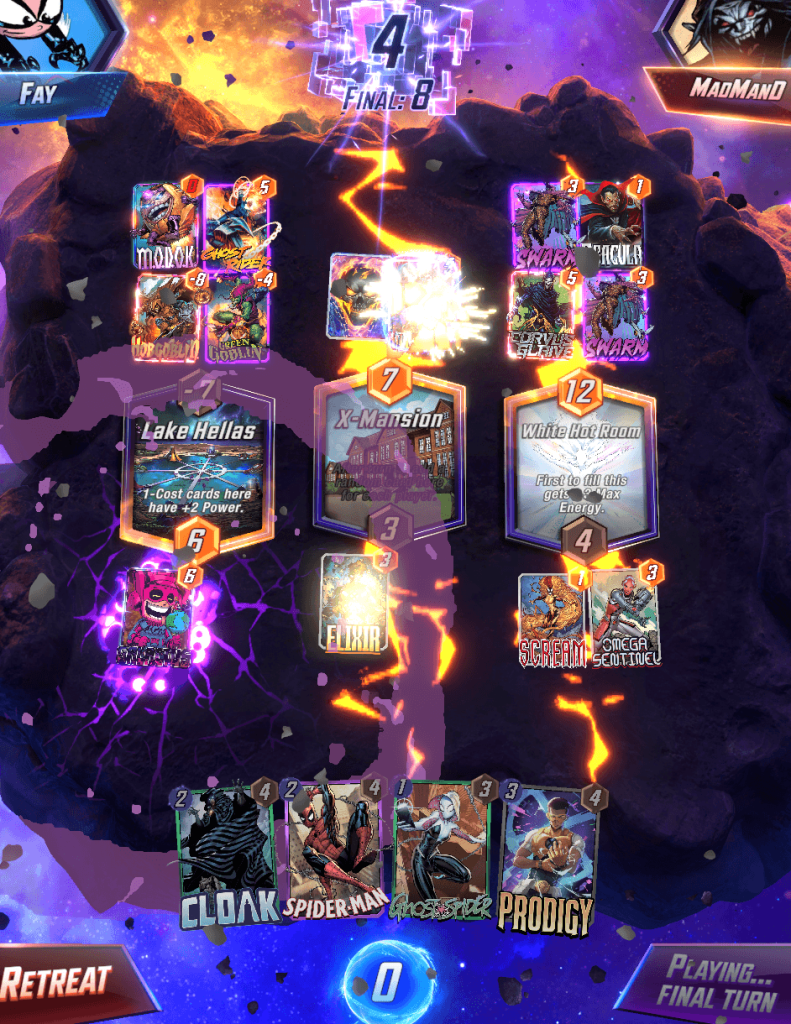
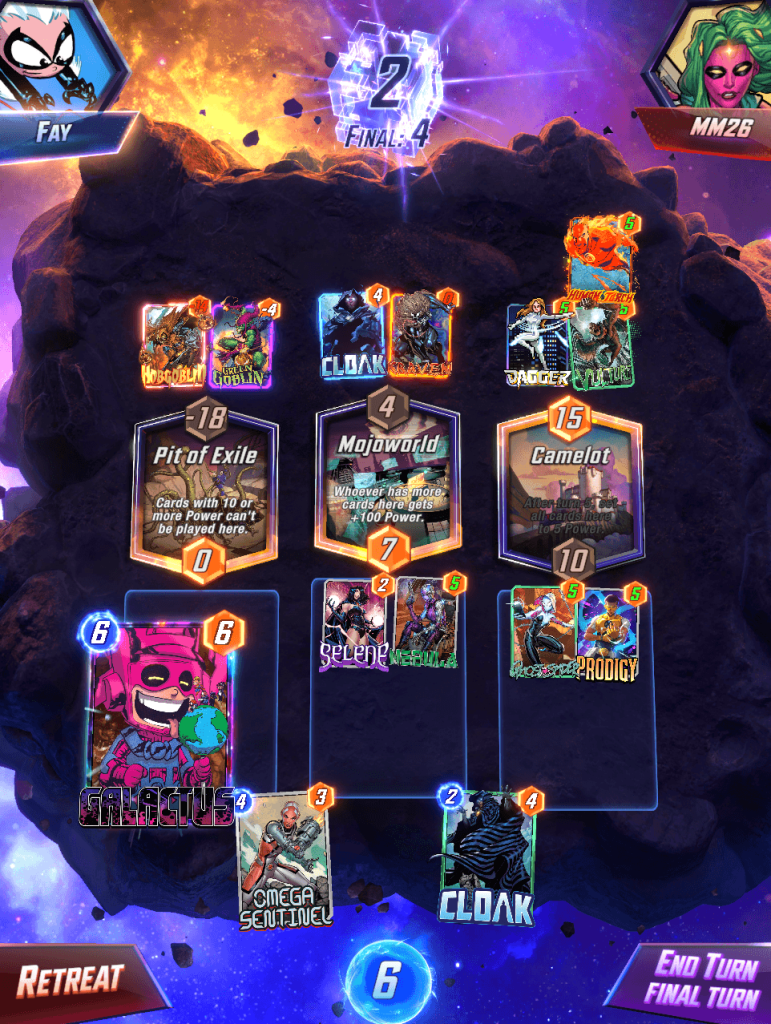
Marvel Snap is a fast digital card game built around a six-turn structure across three locations. Each location flips face-up on turns one, two and three and changes the rules of that lane in ways you have to adapt to in real time. You build a twelve-card deck, play cards to locations to win a majority, and either Snap to raise the stakes when you feel confident or retreat to cut your losses when you do not.
A full match takes three to five minutes. That pacing is exactly why I keep coming back to it over other card games. There is no sitting across from someone for forty minutes hoping they will stop thinking. You are in, you are out, you know the result fast.
What Brought Me Back
The mini-events are a genuine improvement over where the game was when I left. Grand Arena and Voltage in particular scratch a different itch from the standard ranked ladder. They are short bursts of structured competition with their own reward tracks, and having something to play toward beyond just Collector Level makes sessions feel more purposeful.
The card balance is the other thing that has surprised me. There are a lot of new cards since I last played seriously, more than I expected. But the old metas are still working. Decks and synergies that were solid when I left are still viable, which is not something every card game gets right. Second Dinner has clearly been careful about not power-creeping the older cards into irrelevance just to push new releases. That kind of balance philosophy is worth calling out because it is not guaranteed, and games that get it wrong lose their player base fast when veterans feel like their collection was quietly invalidated.
My old go-to was a Venom build, stacking power onto him and then copying it all across the board with Zola. Simple, satisfying, and effective when it landed. Coming back, I have shifted toward running Scorn or being chaotic with Galactus, both of which play completely differently but scratch a similar “watch the plan come together” itch. The fact that I could look at the meta, pick up something new, and also dust off old deck logic without feeling punished for it is exactly the kind of balance I was talking about.
Coming back and finding that my old knowledge still applied made the re-entry feel like picking up a language you had not spoken in a while rather than starting from scratch.
The Lows
Pixel variants. I do not have much more to say about this that my friend and I have not already said to each other through clenched teeth. Pulling a pixel art card when you were hoping for something with actual visual craft is a specific kind of disappointment. The artwork in this game can be genuinely stunning, which makes landing a pixel variant feel even more like a waste of a slot.
The collection model is still the game’s most debated aspect. The Collector’s Tokens system is better than what launched with the game, but acquiring specific cards you actually want still has a randomness layer that can feel frustrating if you are chasing something in particular. You are not always spending toward a target, sometimes you are just hoping the pool gives you something useful.
For free to play players the progression is manageable but slow. If you are a completionist or someone who needs to have the newest meta cards day one, the gap between free play and spending is real. In fact, if you don’t spend money, you feel lagging behind due to the sheer amount of new cards that comes out constantly. In the past, I would say this game isn’t really Pay2Win but nowadays, it very much really is.
Worth Playing?
Sure does, since the game really does not ask for much. A few matches here, a few matches there, done. Lose a few too many matches, Alt+F4 & put it down without guilt. That low-friction loop is genuinely rare and I think people undervalue it.
Honestly, it’s enjoyable playing when I know my friends play too despite its really a solo game & climbing a ladder alone. The theory crafting conversations, the screenshot sharing, the mutual suffering every time a pixel variant drops instead of something worth looking at, that layer makes it stickier than the game probably deserves on its own. If you have someone to talk Snap with, it punches above its weight significantly.
This season I am actually going to attempt Infinite. At least once, at least one season, I want to see what that climb looks like. Knowing me I will be chaotic about it and still running Galactus while everyone suffers, myself included.
I will also absolutely continue spending gold on cards I think look amazing and will probably never use in a real deck. That is just who I am at this point. There are characters in this game with gorgeous art that have no business being in any competitive list and I will collect them anyway because they make me happy. Is it efficient? No. Do I care? Also no.
As long as I am having fun that is genuinely all that matters to me. The Collector Level 9,100 and still opening the app most days says enough about how that is going.

