
Evil Genius 2 Review
Didn’t want to play World of Warcraft all weekend, already had Raid nights, during the afternoon, I felt like something else, something more chill. I downloaded Evil Genius 2 over the weekend expecting one of two outcomes: either I would get hooked by the villain fantasy again, or I would bounce off the pacing in a weekend. It ended up being both.
When this game clicks, it is still a great time. Building a lair that actually flows, watching your trap corridor do exactly what you designed it to do, and slowly turning chaos into a working evil machine is genuinely satisfying. The theme carries a lot too. It is goofy, self-aware, and full of personality in a way most management games are not.
But if you came in looking for fast strategy, this game will test your patience hard.
What Evil Genius 2 Actually Is
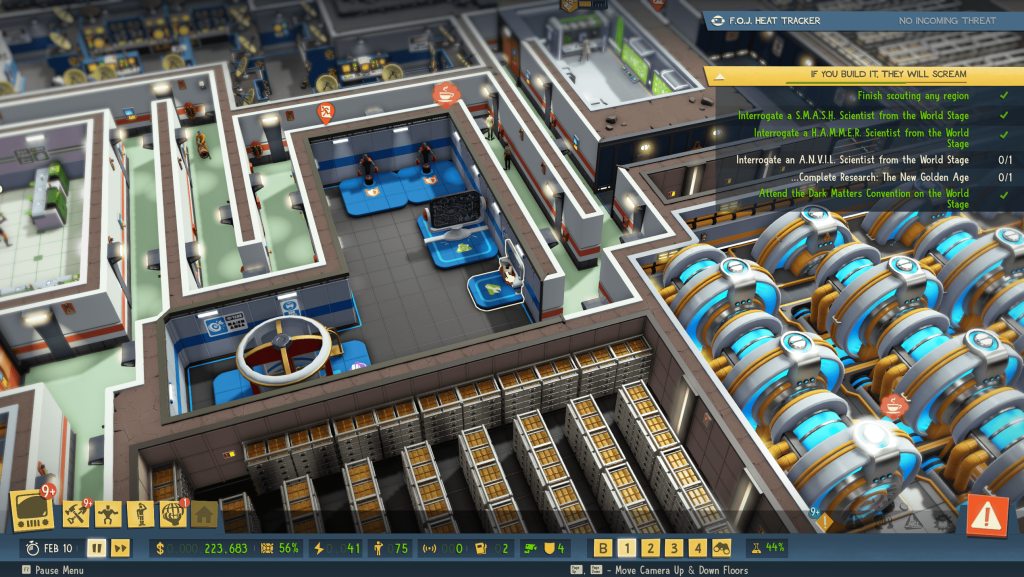
Evil Genius 2 is a base-building management sim where you run a criminal operation from your island lair, juggle minions, keep heat under control, and deal with invading agents while expanding your world map operations.
The core loop is planning-heavy. You are not reacting every second. You are setting systems, fixing bottlenecks, and waiting for your layout decisions to either save you or punish you.
If that sounds like your kind of game, you are in the right place.
What Still Works Really Well
The strongest part, for me, is still base design. I love that moment where a messy early layout becomes a clean machine and everything starts moving with less friction. You feel your decisions paying off in real time.
Trap setups are another highlight. Layering distractions, choke points, and damage traps never really gets old when it works. Watching invaders get dismantled by something you engineered is the exact fantasy this game is selling, and it delivers there.
I also think the long-term optimization loop holds up better than people give it credit for. If you enjoy tuning systems, this game gives you enough moving parts to stay engaged.
The Lows
My biggest frustration is how repetitive the early loop felt in my first stretch with it. For the first several hours, it kept boiling down to the same cycle: wait for someone to infiltrate, capture them, keep building, check the world map every few minutes, repeat.
That repetition is where the management overhead started to feel less like strategy and more like maintenance. The pace is slow, progression is slow, and if you are not personally enjoying that rhythm, it can feel like you are doing chores instead of playing.
But if you prefer tactical combat-first strategy games, the combat layer here is not enough to carry you through the slower management sections. You will feel that mismatch early.
DLCs, Expansions, and Post-Launch Value
One thing that matters with games like this: it is not always a one-time purchase via Buy to Play model if you want the full long-term experience. Big features often come through paid DLC, not just free updates, so the “real price” can climb over time depending on how deep you go.
My feeling on this is mostly neutral. Some games handle DLC in a way that feels fine, and some make me feel a little icky when core-feeling additions are locked behind extra spending.
For Evil Genius 2 specifically, I do not mind it as much. The DLC direction feels more acceptable to me when it includes campaign-style content, instead of only charging for smaller pieces like a new Genius, Henchman, or island location with no meaningful new arc to play through.
So if you are value-checking this in 2026, do not just judge base-game price in a vacuum. Check what kind of post-launch content you actually care about and price it as a bundle in your head before buying.
Worth Playing?
My honest answer in 2026. Charming theme, but the early loop gets repetitive fast. Enough for a weekend blast, but not enough to be playing week over week, or maybe that’s just me.
If your favorite part of strategy games is building systems and watching your setup finally run clean, you will probably get something out of this. The highs I felt were all in that lane: villain flavor, trap setups, and that satisfying moment where a messy base finally starts working like a machine.
If you are the kind of player who needs momentum every session, the lows I hit are hard to ignore. The first stretch felt repetitive, the map-check rhythm kept interrupting flow, and the management overhead started feeling like chores when the pace slowed down too much.
That is why this lands as a sale recommendation for me. If the theme and slow sim loop are exactly your thing, it is worth picking up. If you want faster tactical payoff and less maintenance energy, skip it and put that money into something that moves quicker.

